Decks built for a Northern Michigan winter
A deck up here spends months under snow and then bakes all summer. That cycle is what finds the shortcuts: undersized joists that sag, footings that heave, fasteners that rust out and railings that start to wobble. Steve's Handyman Services builds and rebuilds decks with the structure in mind first — posts, beams, joists and the connection to the house — because the part you walk on is only as good as what holds it up.
Repair, rebuild or start over?
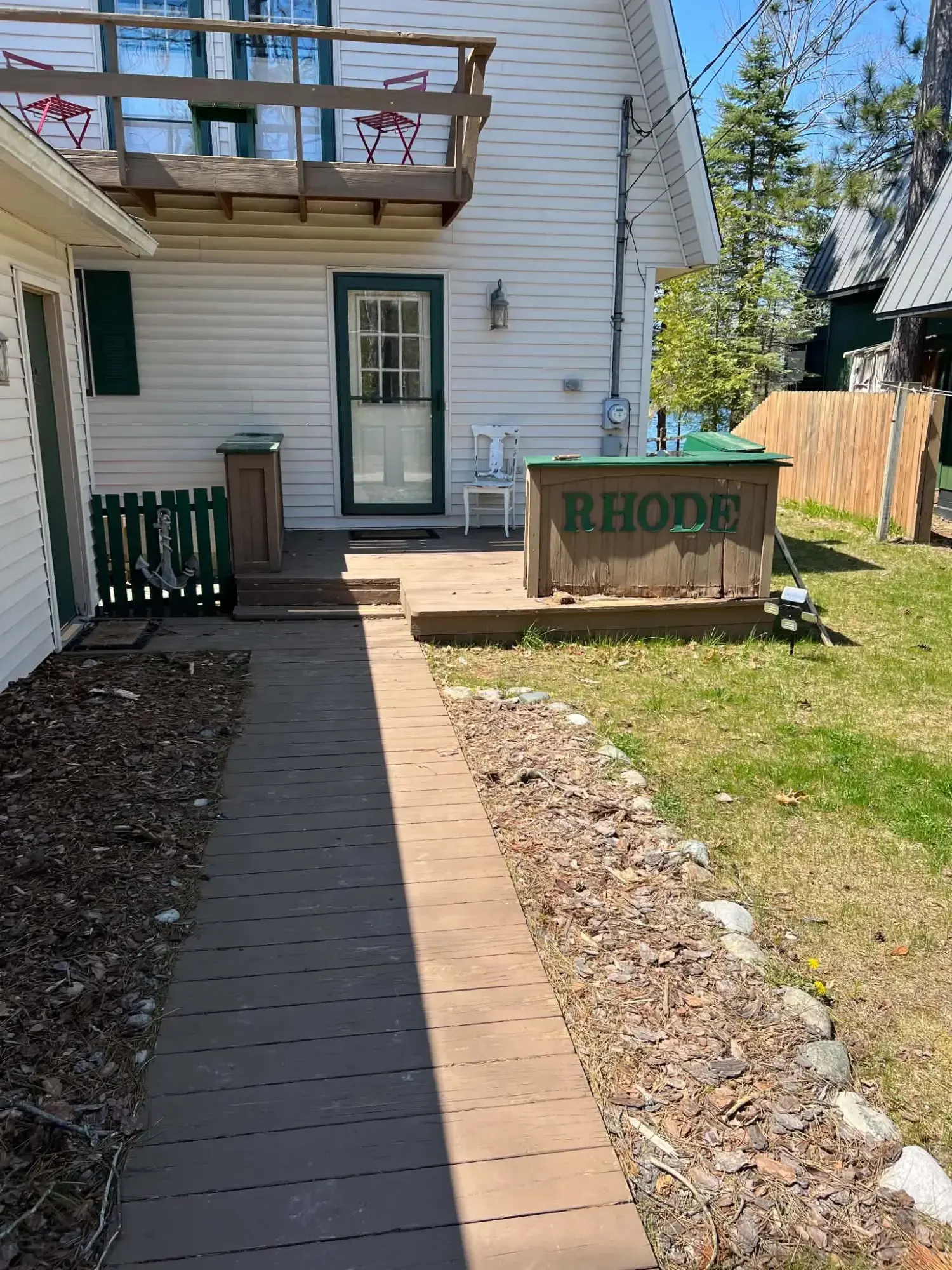
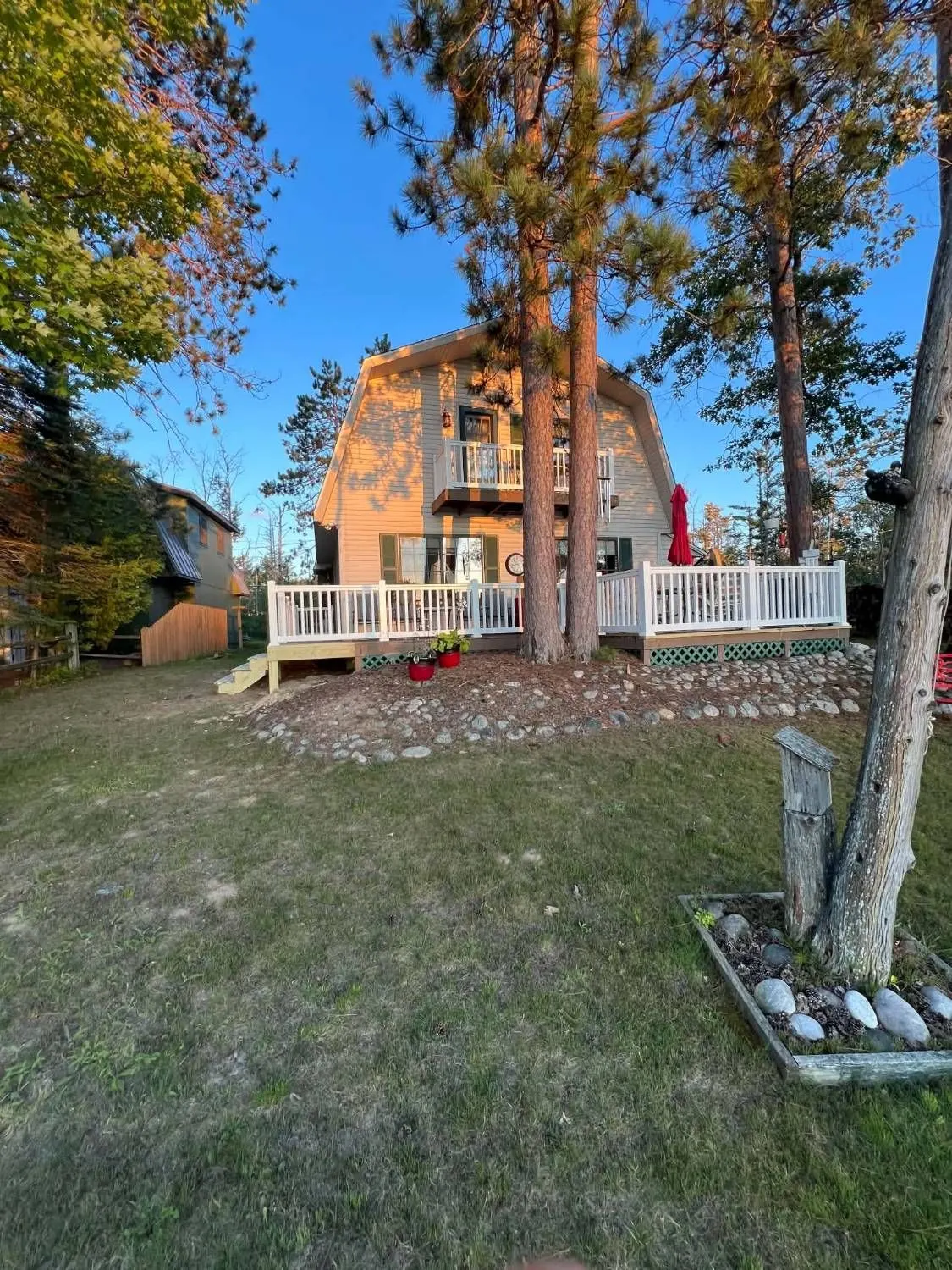
Plenty of decks don’t need to be torn out. If the framing is sound, new decking boards and railings can make an old deck look and feel new for a fraction of the cost of a full replacement. If the joists are soft, the ledger is pulling away or the posts sit directly on dirt, it’s time to rebuild the frame. Steve will walk the deck with you, poke at the soft spots and explain which option makes sense for your place — then put it in writing.
Railings, stairs and landings
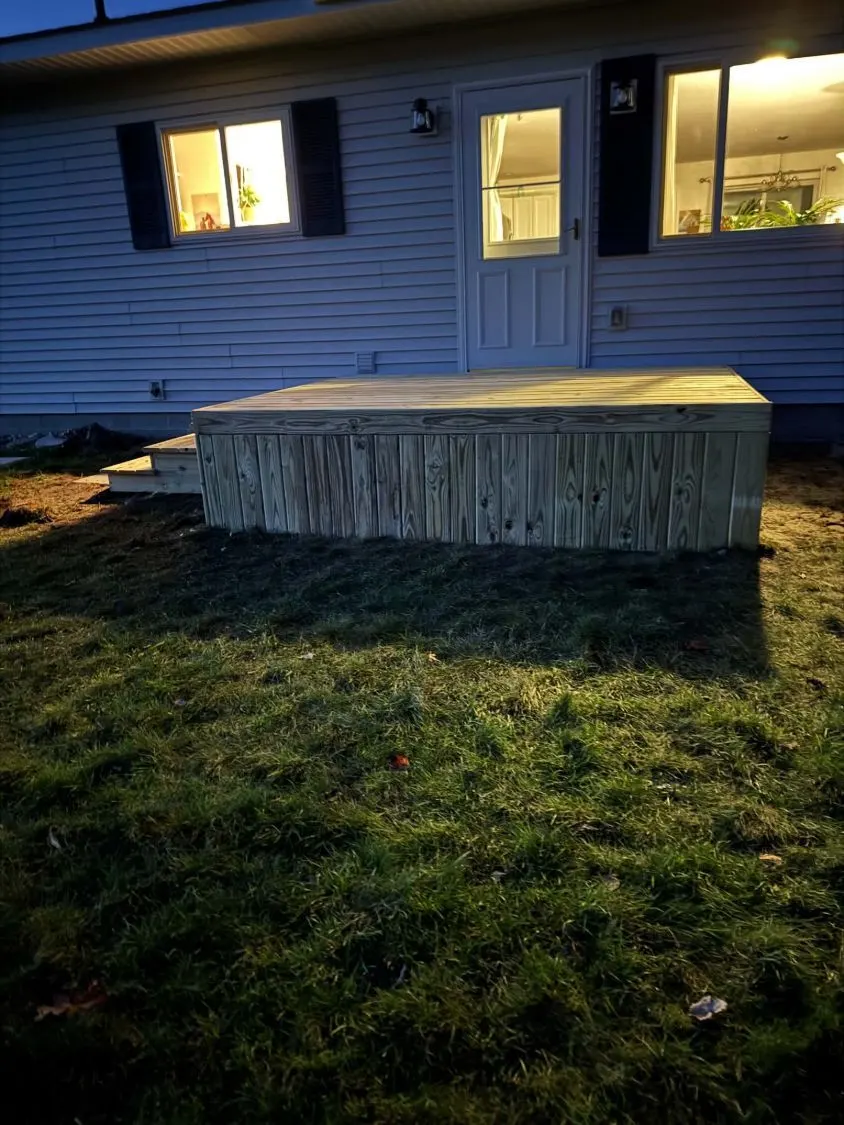
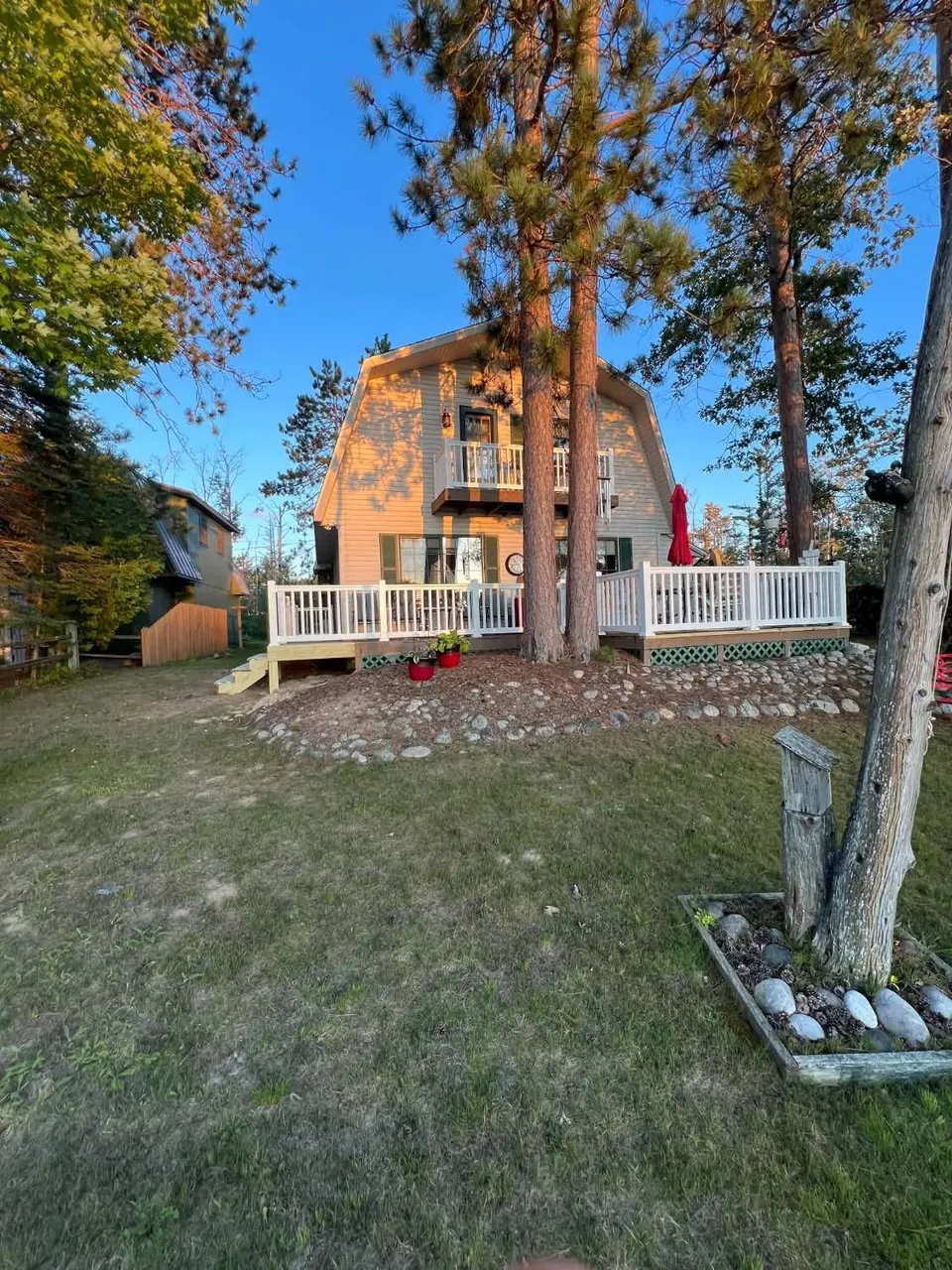
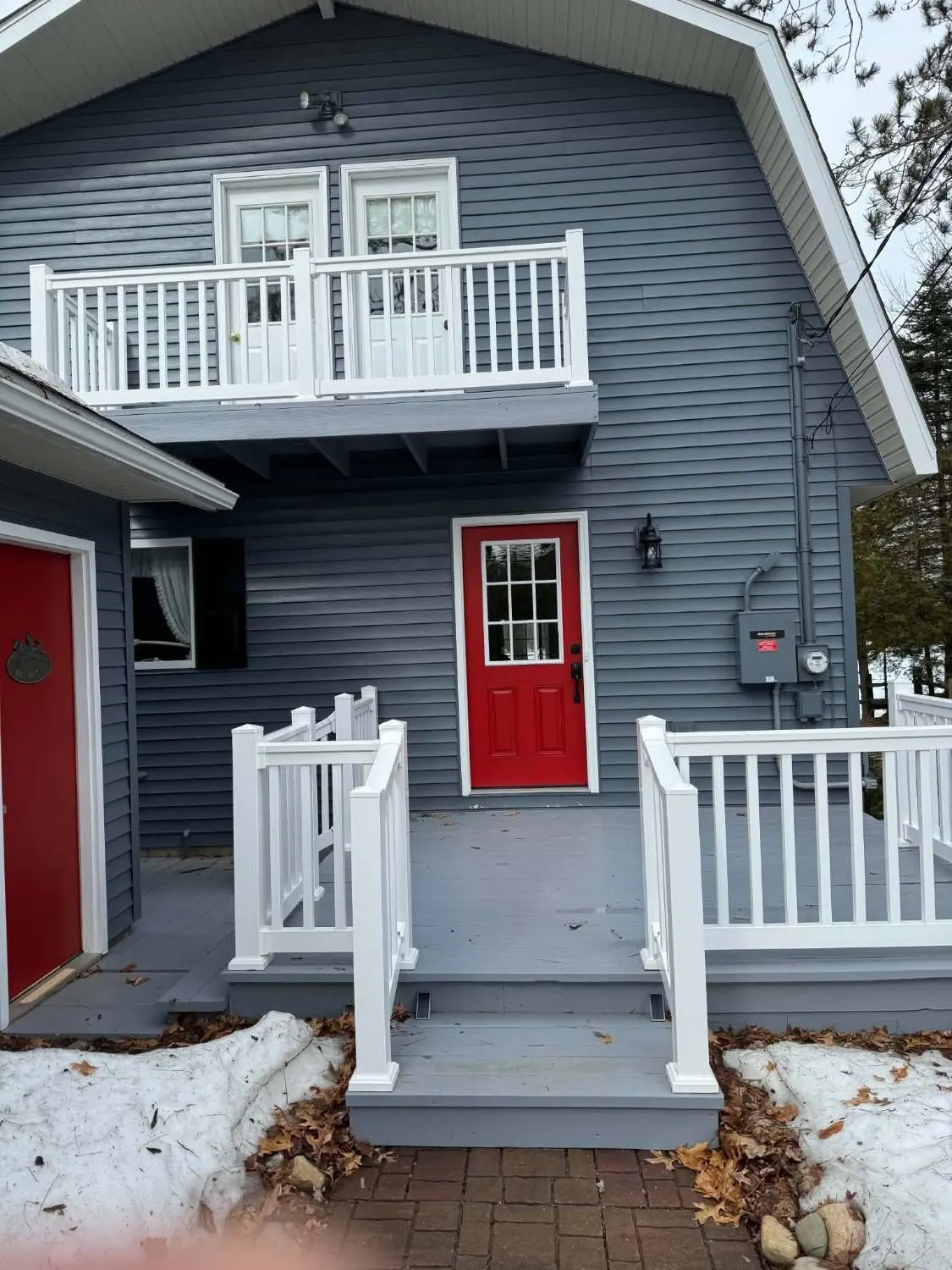
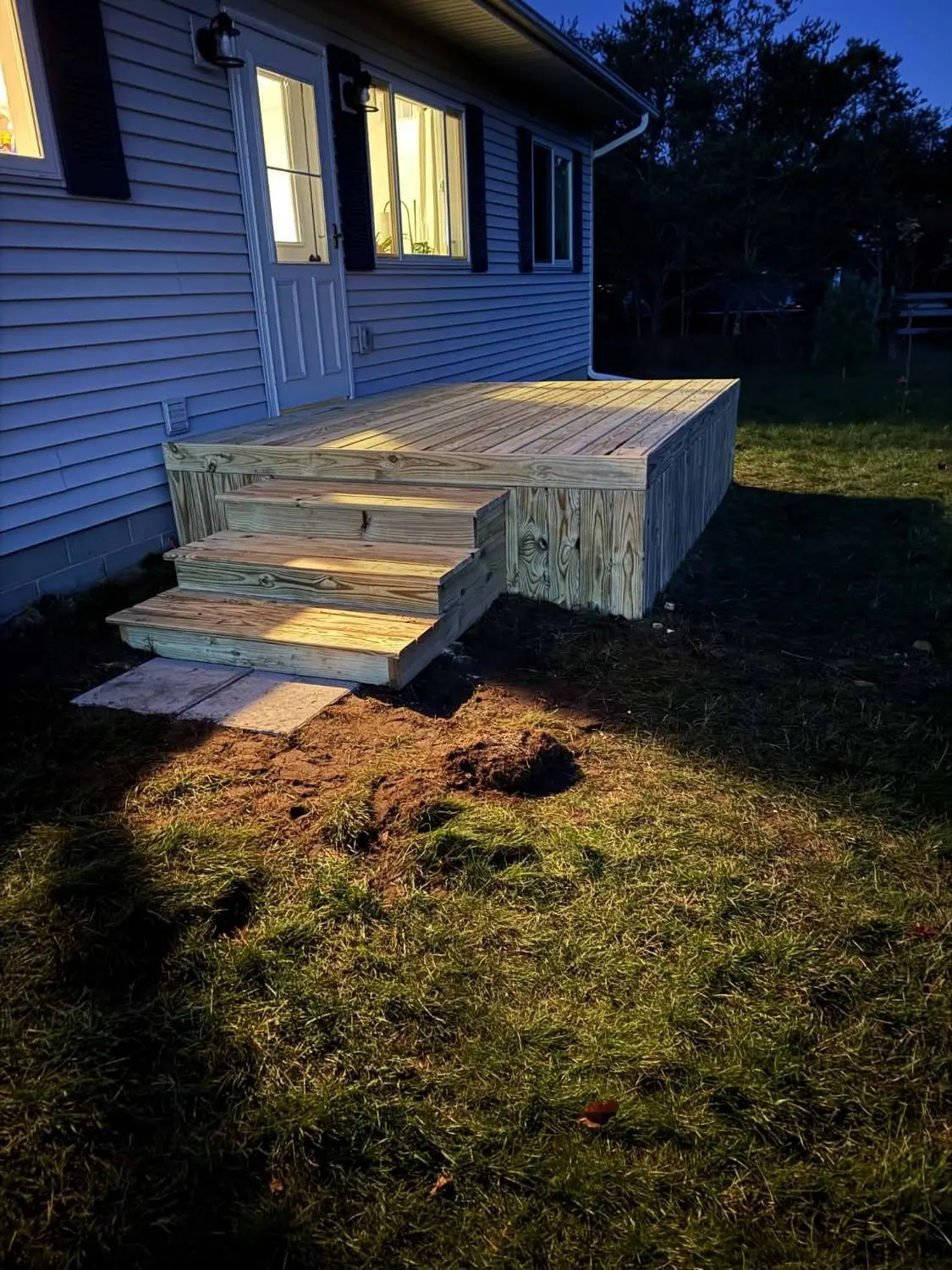
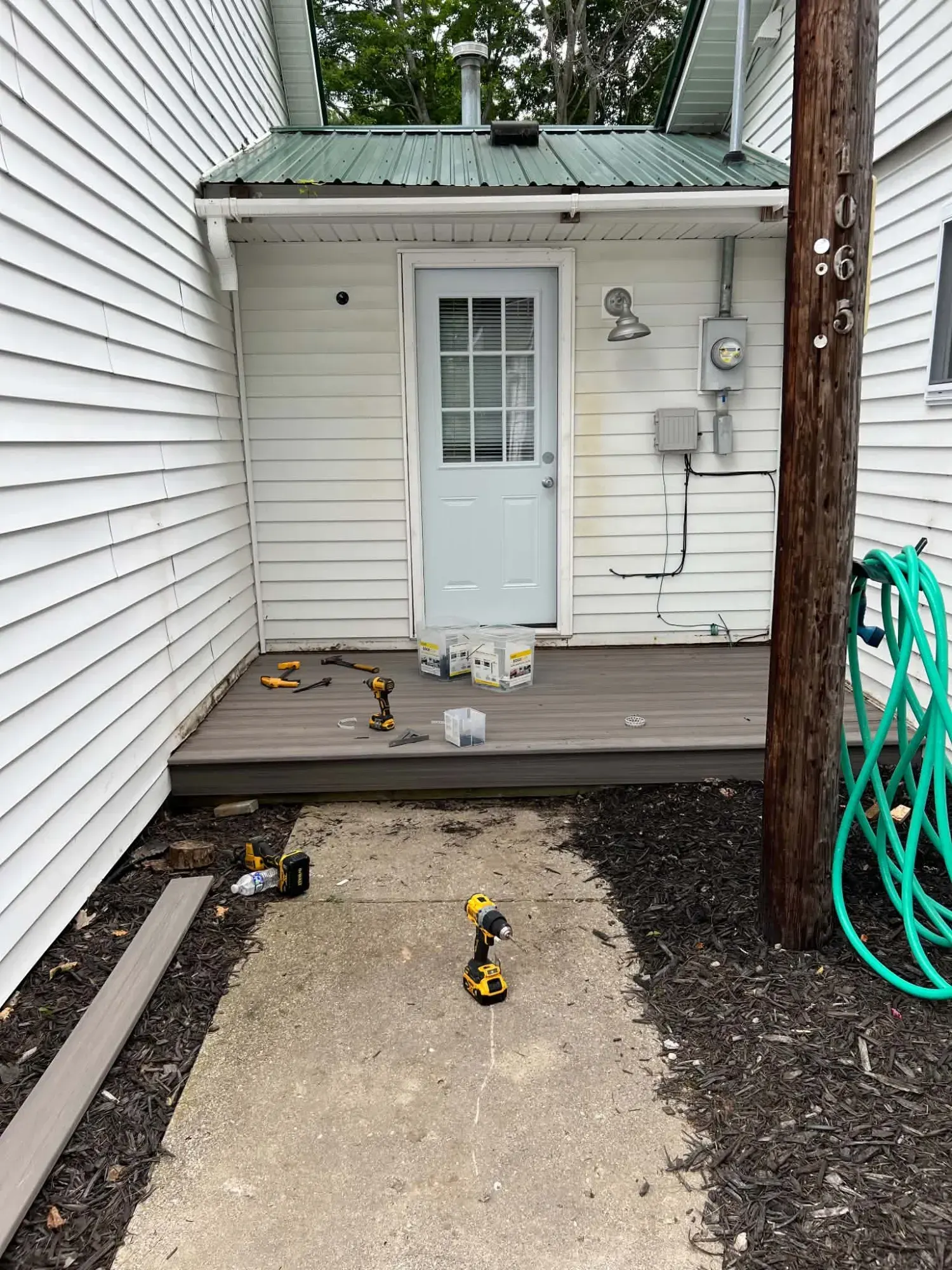
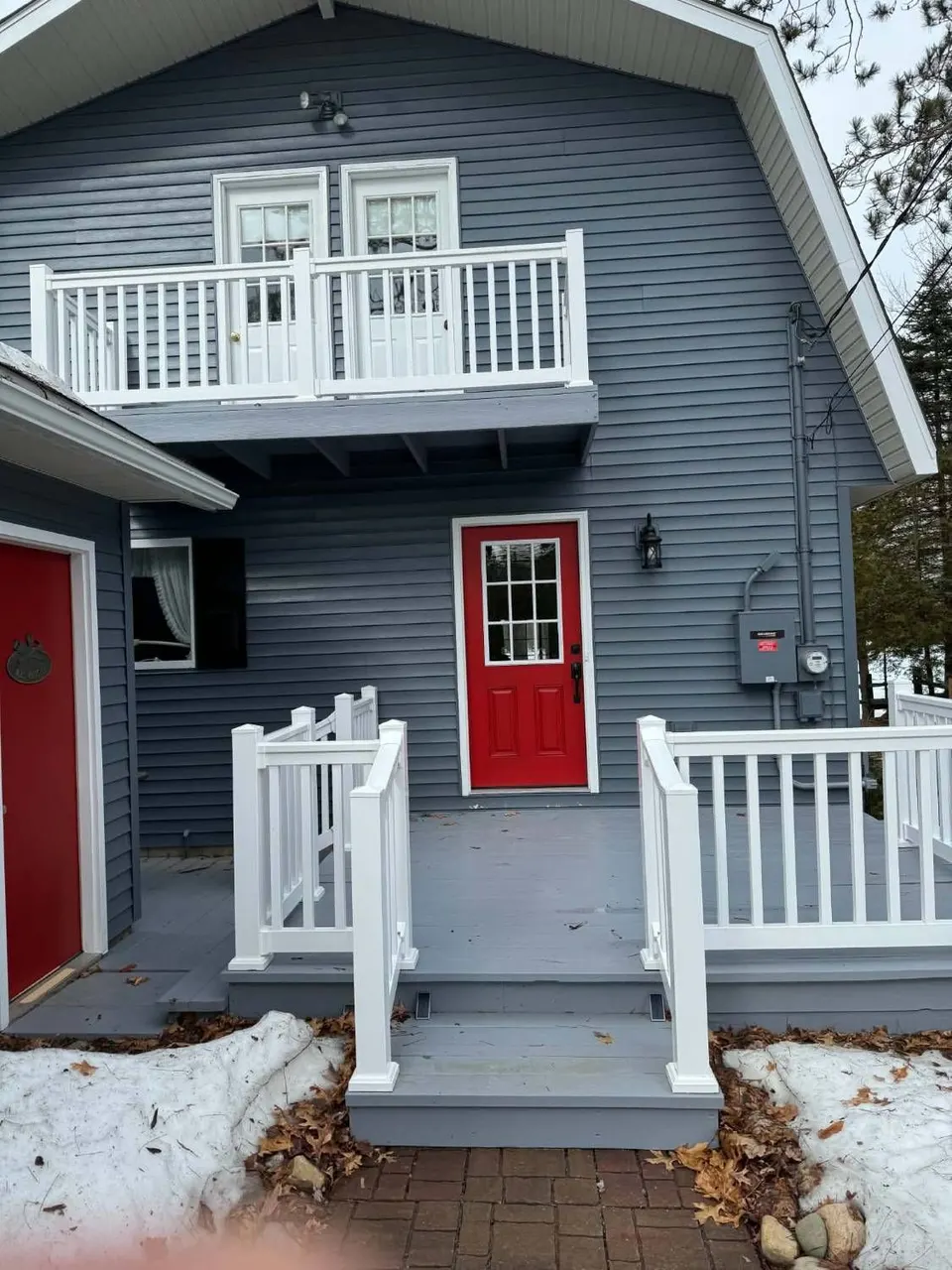
Railings and stairs are where a deck gets safe (or doesn’t). Common jobs include replacing loose wood railings with low-maintenance white vinyl, adding a handrail to a set of steps that never had one, rebuilding a set of stairs that has settled, and building a small landing at a back or side door so you aren’t stepping straight down onto the ground. Balcony railings on second-floor decks get the same attention.
Pressure-treated or composite?
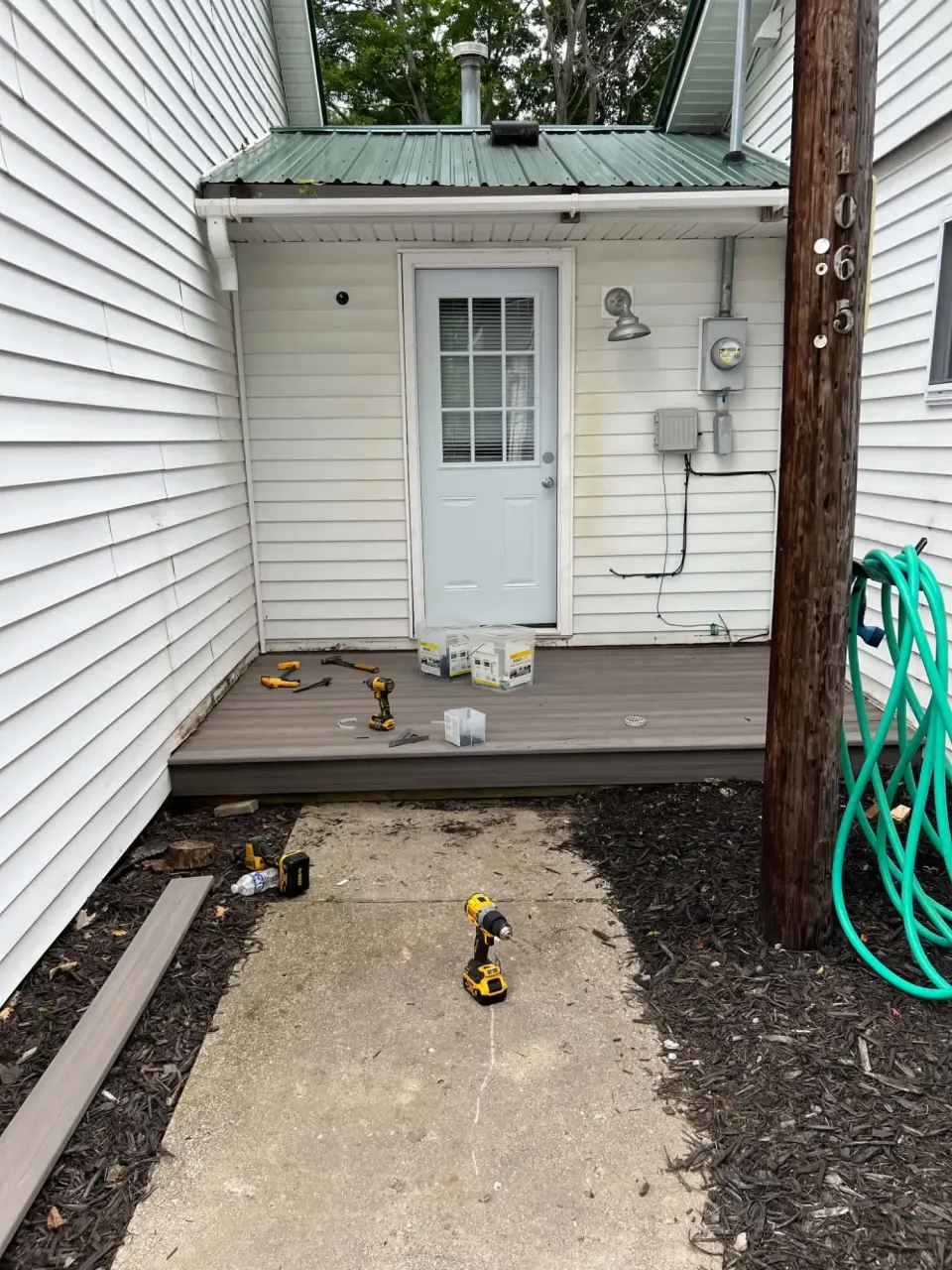
Pressure-treated lumber costs less up front and is easy to repair, stain or paint. Composite decking costs more but doesn’t need staining and won’t splinter — popular for lake cottages that get heavy summer use and little upkeep. Many decks use both: a pressure-treated frame with composite on top. The estimate can price either so you can compare.
What your deck estimate covers
Every free estimate spells out the scope (what gets torn out, what gets built, what materials), the cost, and how long the work will take. Call 989-858-6732 or send a few photos through the estimate form to get started.